Hand-Built Stoneware vs. Mass-Produced Ceramics: What Designers Should Know
Put a hand-built stoneware vessel next to a mass-produced ceramic vase from a décor catalog and photograph them for a mood board — they can look deceptively similar. In the room, they never are. This article is about why, written for designers who have to justify the difference to clients, and for collectors deciding what's worth paying for.
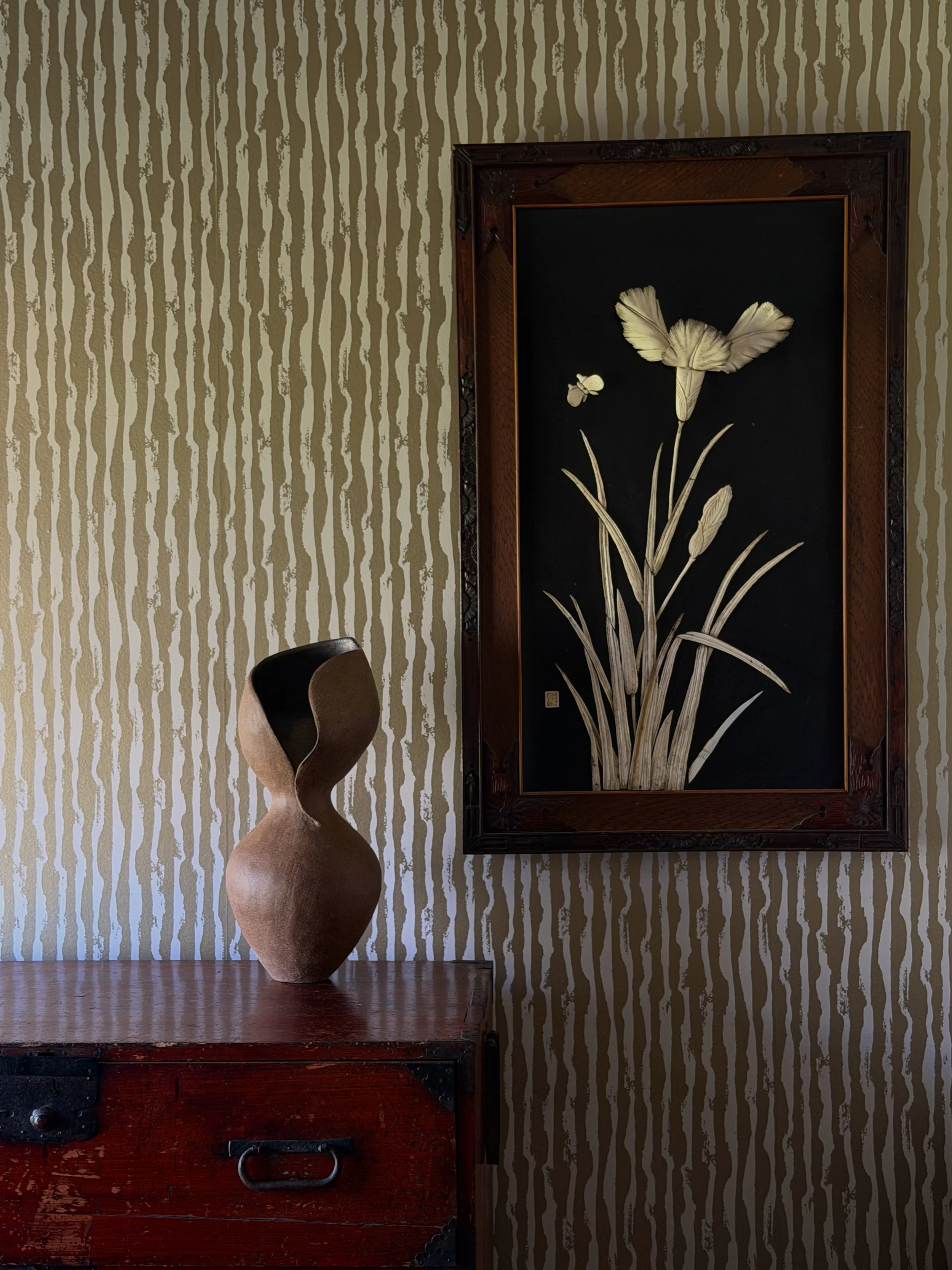
The Woman vase — a hand-built stoneware vessel, in the Erica Tanov atelier.
How each is actually made
Mass-produced ceramics are slip-cast: liquid clay poured into a plaster mold, released, glazed, and fired by the thousand. Every unit is meant to be identical, and the walls are uniformly thin because the mold makes them so.
Hand-built work starts as raw clay and nothing else. In my studio each piece is built with coiling and slab techniques — clay joined, pinched, and shaped over hours, dried over weeks, fired to cone 6-10. There is no mold, so there is no second copy. The wall thickness varies where my hands worked the form; the silhouette is never perfectly symmetric because no wheel and no mold enforced symmetry on it.
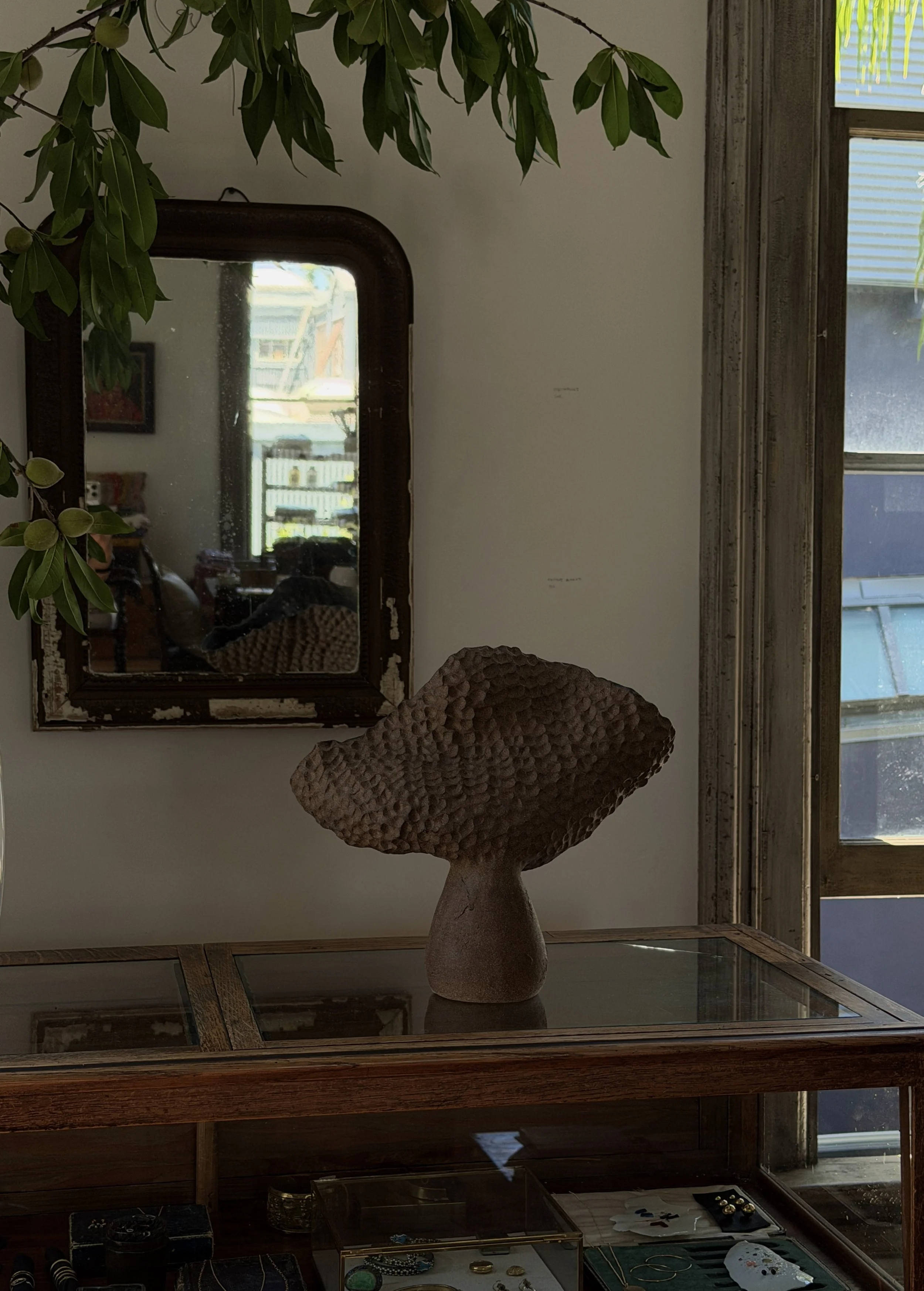
The Coral vase in the Erica Tanov atelier.
What your eye (and hand) picks up
Surface. A molded piece has the surface of the mold — smooth, repeatable. A hand-built piece holds tool marks and texture that grew with the form, so light moves differently across it through the day.
Weight. Hand-built stoneware has mass. Pick it up and it tells you how it was made — clients notice instantly, even when they can't say why.
Irregularity. On a molded piece, it's a defect. On a hand-built piece, it's the record of a decision — kept, not corrected.
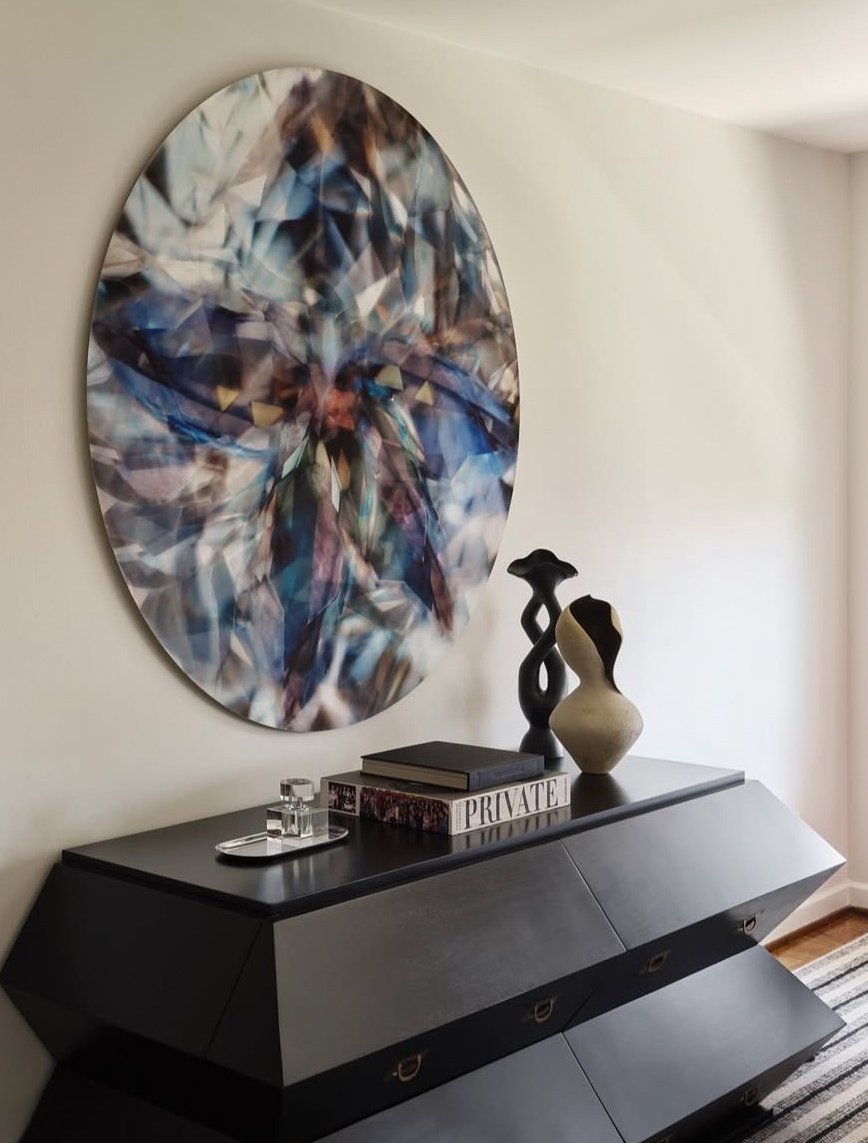
The Woman vase styled on the console in a room designed by Holly A. Kopman Interior Design.
Why it matters in an interior
A room of manufactured objects has no visible point of making. One hand-built piece changes that — it gives the eye a place where a human decision shows, which is why designers use sculptural ceramics as the "soul object" on a console, mantel, or dining table. That's the role my pieces played at the 2026 San Francisco Decorator Showcase: the organic counterpoint in a contemporary architectural room. With a living artist, you can ask for the height or palette the room needs by inquiring a commission.
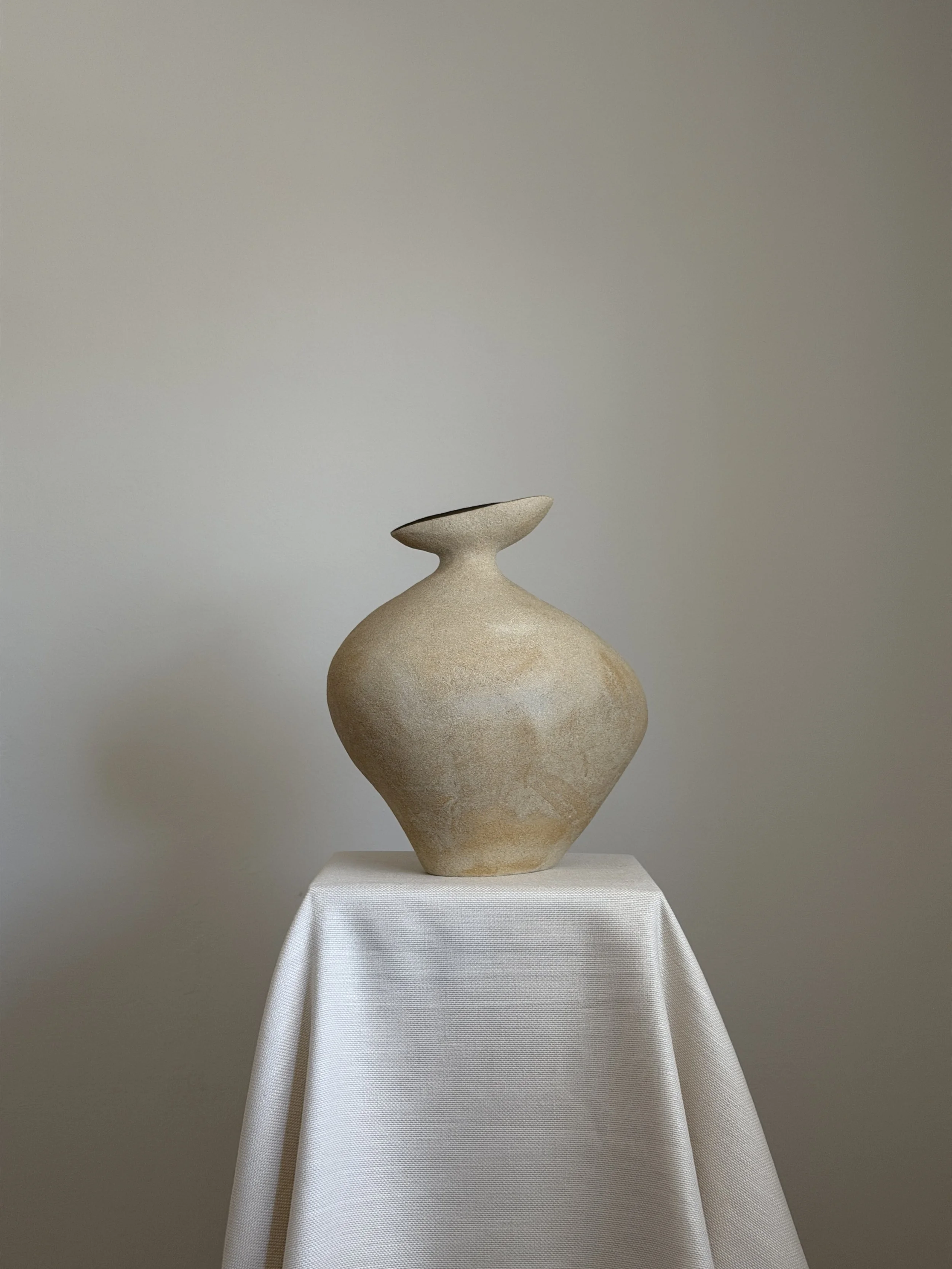
Asymmetric Vase No. 1, hand-built stoneware.
What justifies the price
A $60 molded vase and a $600 hand-built vessel aren't the same product at different margins — they're different objects. The hand-built price carries weeks of labor, real firing risk, and singularity: the piece can't be re-ordered, restocked, or seen in anyone else's project. Each of mine is signed on the bottom for exactly that reason.
If you'd rather see the difference than read about it, my available works are photographed honestly — texture, weight cues, and all.