How to Style a Console Table with Ceramics
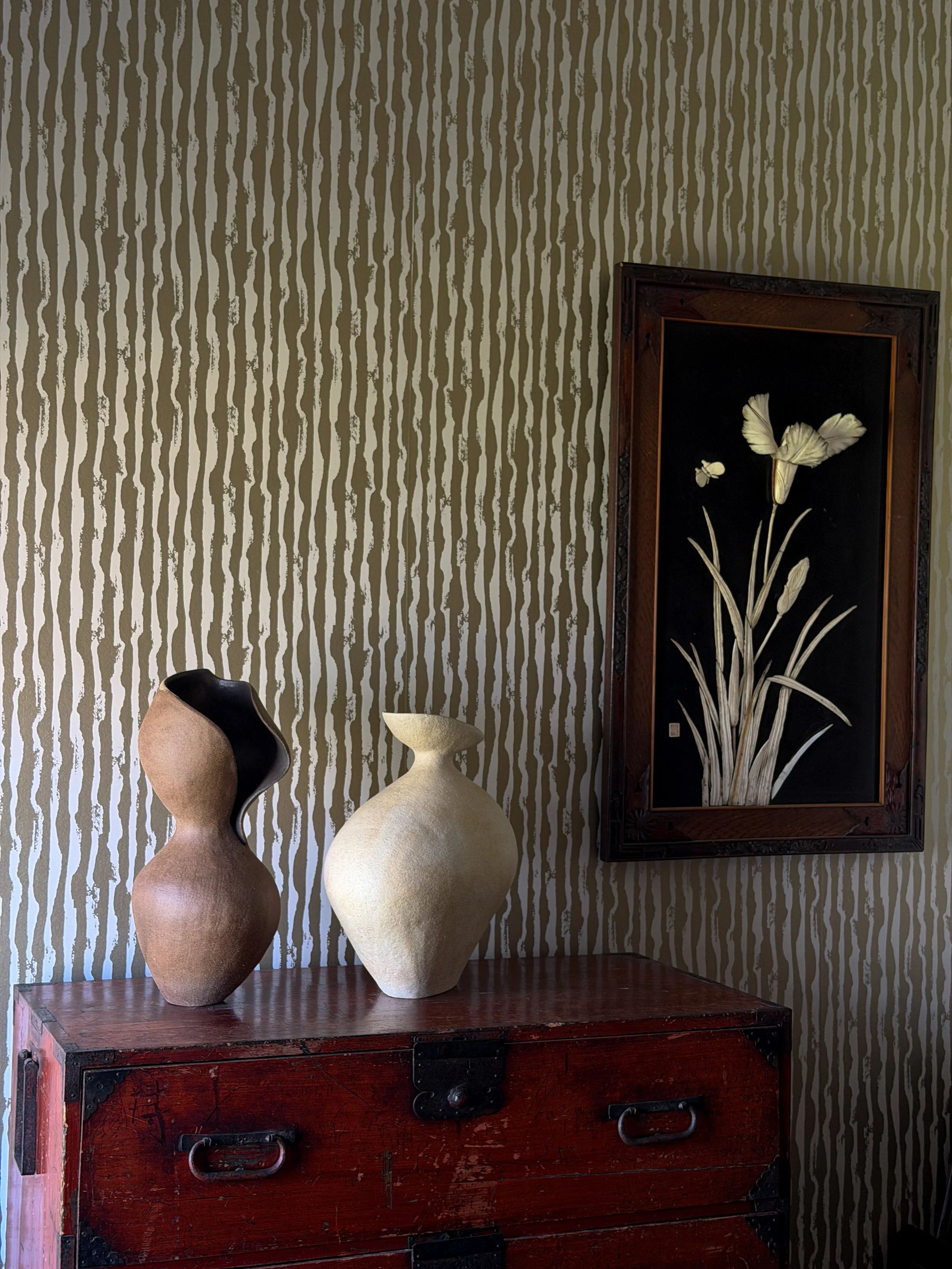
Two of my vases at the Erica Tanov Atelier in Berkeley
The question designers ask me most isn't about clay or glaze. It's how big the piece has to be.
Start with height. The most common mistake is buying too small. On a standard console — 30 inches high, 12 to 14 deep — the tallest object wants to be 14 inches or more. Below about 10 inches a piece stops registering from across a room. If there's art above, leave 4 to 8 inches between the top of the object and the bottom of the frame.
Check depth as well as height. A console is often only 12 inches deep, and a wide round vessel will overhang the front edge and get knocked. A flatter form sits closer to the wall and leaves the surface usable.
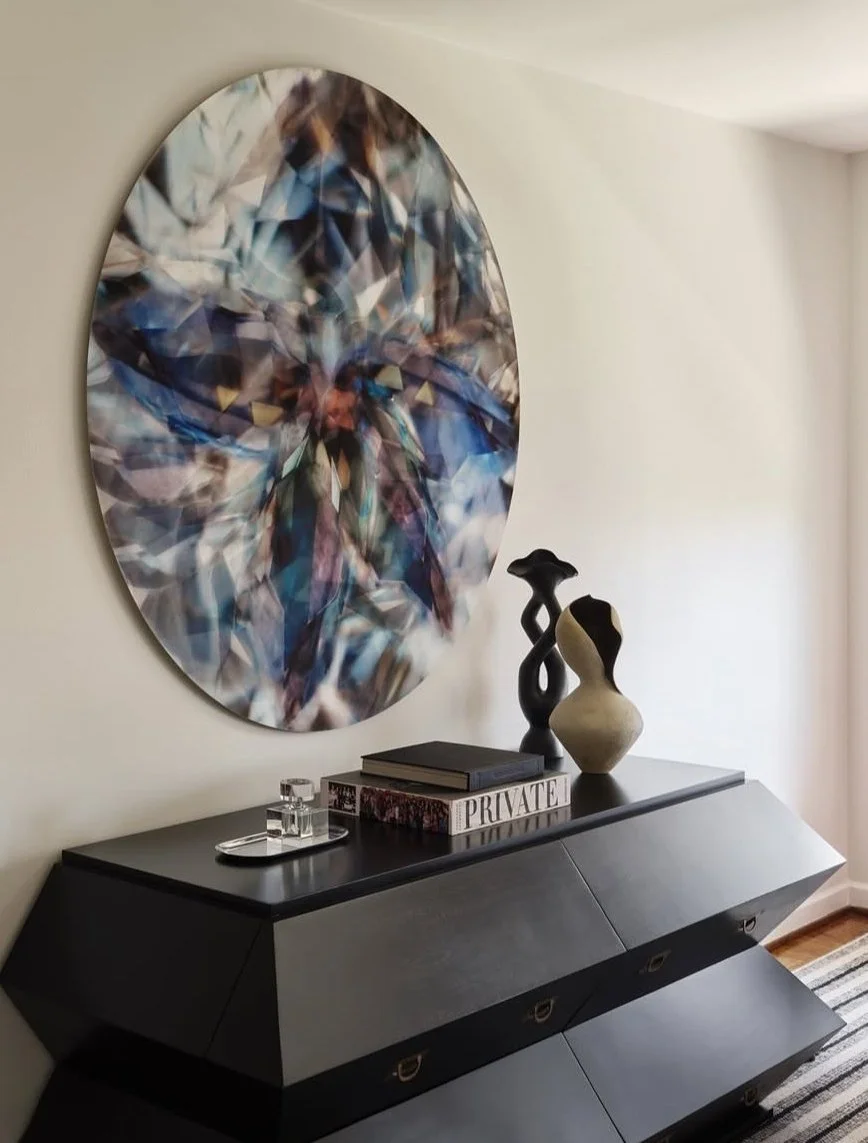
One of my sculptural vases in a home by Ricki Stevens Design — on a black lacquered sideboard beneath a round abstract work.
Group in threes, with real height difference. Odd numbers compose better; pairs demand a symmetry you may not want. But three objects of similar height is just a row — aim for a tall piece, one about two-thirds its height, and one low. Arrange them as a triangle rather than a line, and let them overlap slightly from the room's main sightline. Overlap is what makes three things read as one composition.
Leave half the surface empty — closer to two-thirds in an entry, where keys and post land too. A single strong object on a clear console looks deliberate; the same object with four small ones around it looks like a shelf that needs sorting. If a surface keeps ending up cluttered, the answer is usually one larger piece, not better arranging.
Use texture where color isn't available. When a palette is settled, a matte or unglazed ceramic surface holds shadow and shifts through the day as the light moves — it keeps a tonal room from going flat without adding a colour anyone has to approve. One textural piece per surface, though. Texture competes with texture.
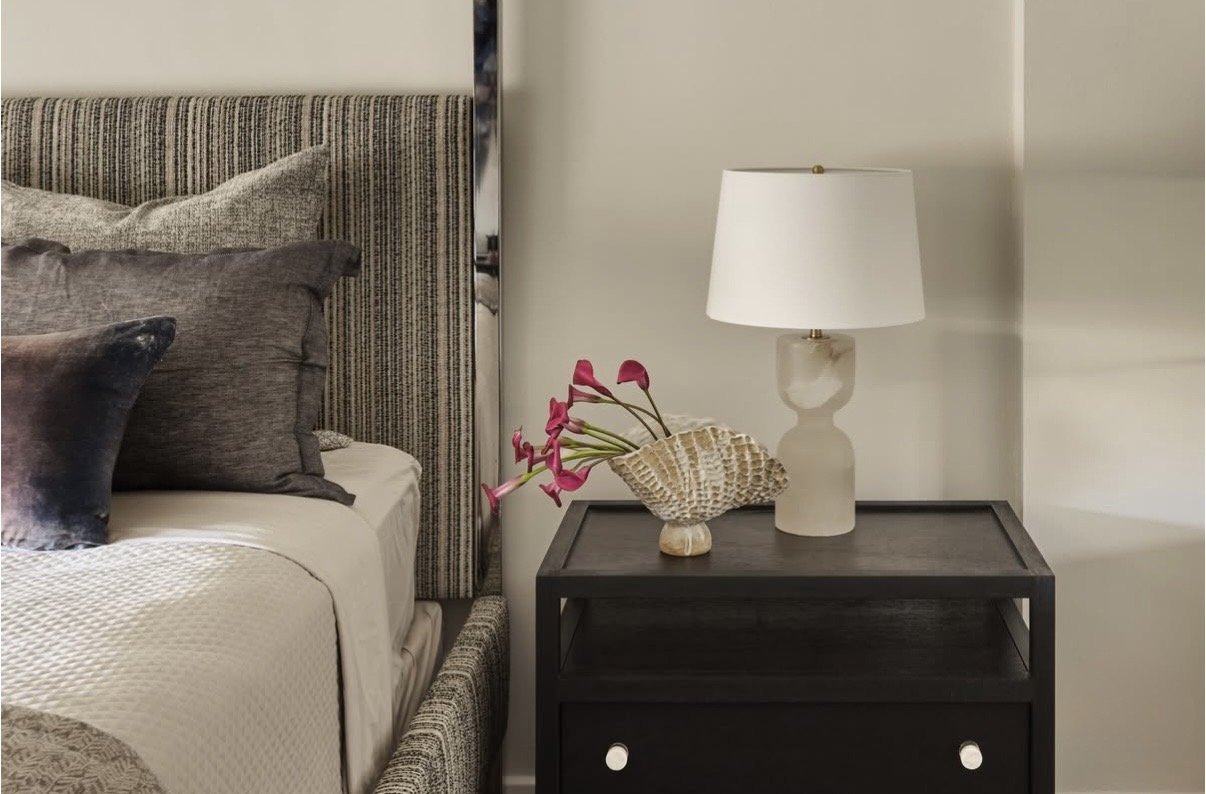
My Coral vase on a bedside table in a project by Ricki Stevens Design, holding calla lilies.
Two questions worth asking before you buy. Does it hold water? Many sculptural vessels don't, and that isn't a fault — but a client who fills one with tulips will be unhappy. And is it signed? On a client project, attribution is what separates a specified piece from a bought one.
Everything in my studio is hand-built in the San Francisco Bay Area and signed — the current work is in the collection: vases, sculptures and trays. Trays start at $25; vases and sculptures run $300 to $1,500. Commissions take six to ten weeks, and there's more for the trade on the designers page.
If you're choosing for a specific project and want a second opinion on scale, write to me.
— Anastasia