Commissioning a Custom Ceramic Piece: A Designer's Guide
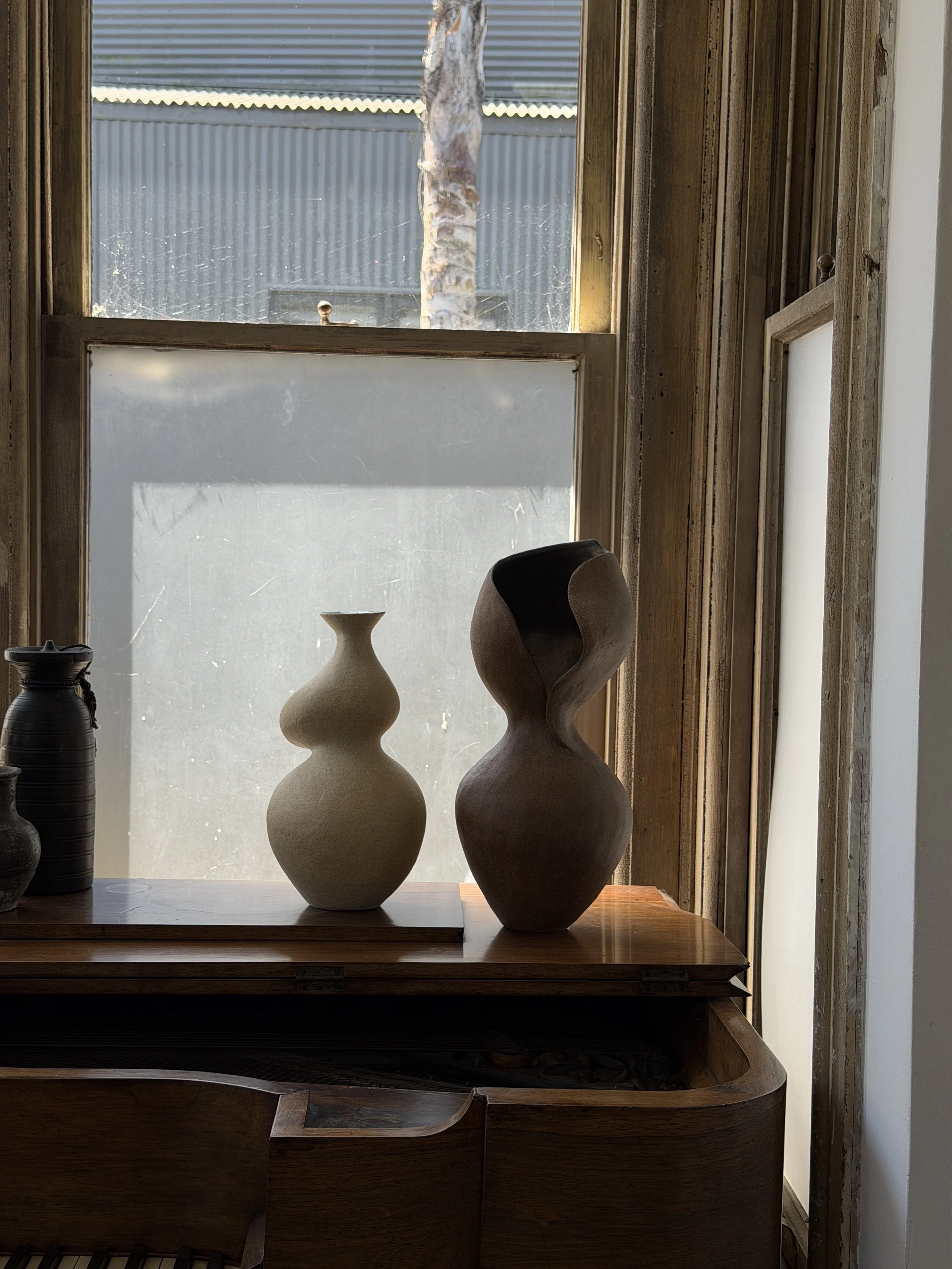
Two hand-built stoneware vessels, She and Woman, catching the afternoon light at Erica Tanov's atelier in Berkeley. Coil-built and unglazed — the light does the finishing.
Most commissions start the same way: a designer or collector finds a piece they love — on this site, in a showroom, in a magazine — and the room needs something almost like it. A different height, a different palette, a pair instead of one. Here's how the process works, so you know what to expect before the first email.
When a commission makes sense
A stock piece is faster, and you see exactly what you're getting. A commission is the right call when the room asks for something specific: a vessel scaled to a particular spot, a palette that needs to sit with a certain textile, a set composed for one dining room — or a form you loved that has already sold. Every piece I make is one of a kind, so sold work is never repeated, but I'm happy to create a sibling: not a copy, a new piece that carries what drew you to the first one.
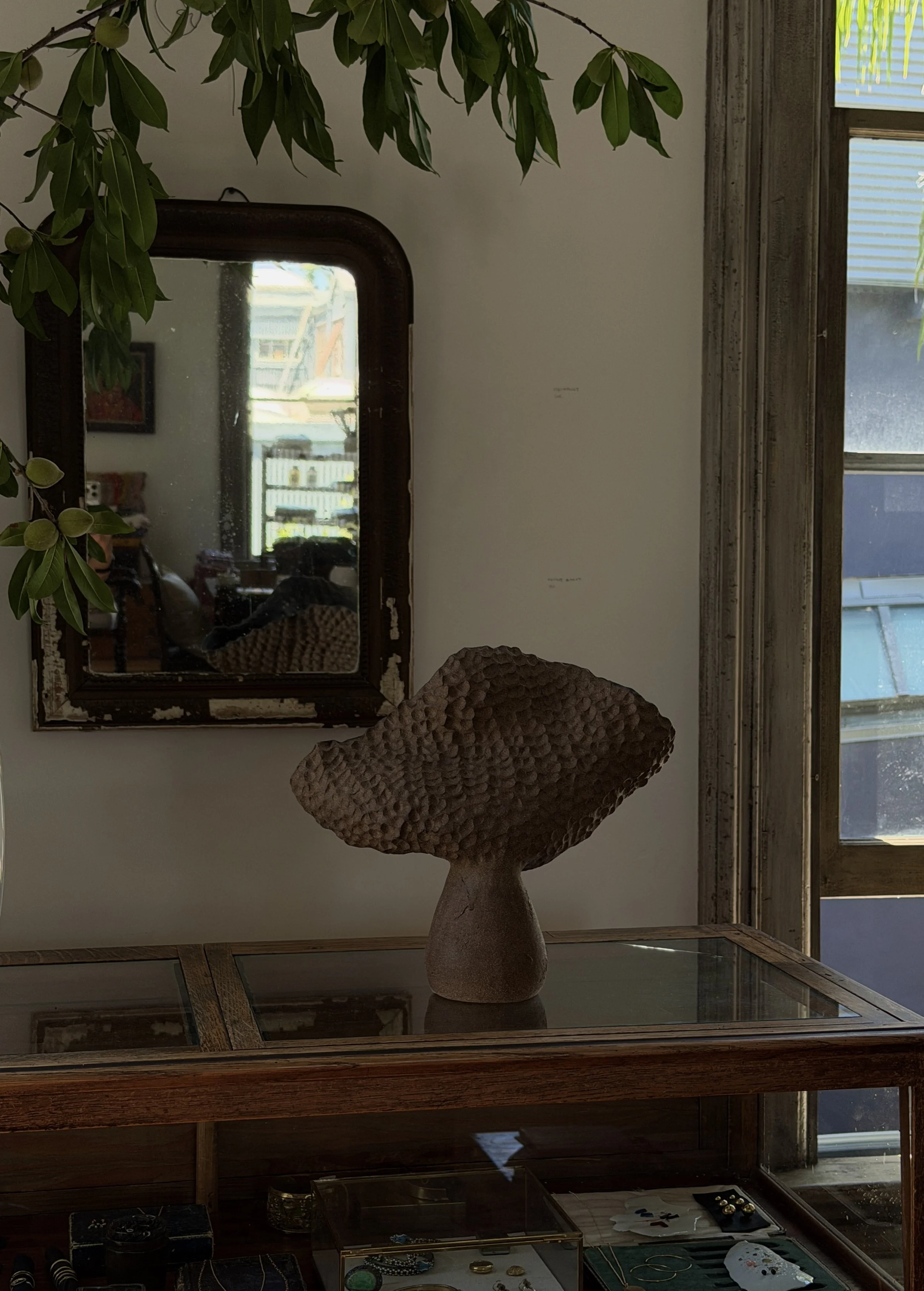
Carved texture, quiet corner. This Coral sculpture found its light at Erica Tanov's atelier in Berkeley — every dimple pressed by hand before the final firing.
How it works
1. The inquiry. Send a note through my Commissions page or by email. Helpful details: approximate size, where the piece will live, a reference image or two, your timeline, and budget range — but a simple "is this possible?" is a perfectly good start.
2. The conversation. I reply with availability, feasibility notes, and pricing. For designers, this is where we talk about what the piece needs to do in the space.
3. The build. Hand-building takes time: coiling and slab construction, slow drying, bisque firing, surface work, and the final firing. This is where most of the 6–10 week timeline lives.
4. Delivery. You see photos of the finished piece before it ships — carefully packed, with local pickup or delivery by appointment in the Bay Area.
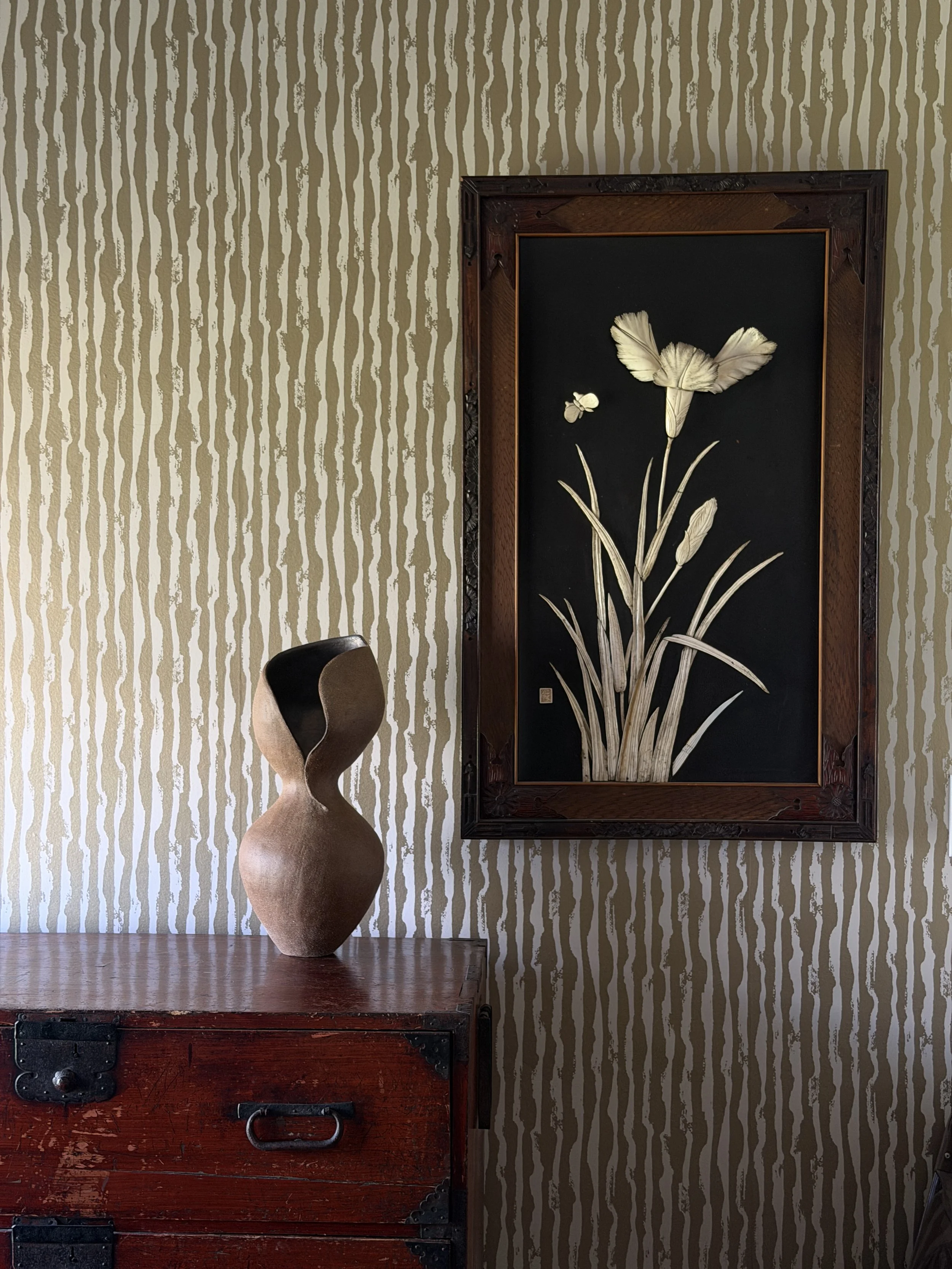
At home among old things: a hand-built sculptural Woman vessel on a vintage tansu chest at Erica Tanov's atelier. Raw stoneware, folded rim, no two alike.
What shapes the price
Mostly three things: scale (I work up to about 15 inches tall — the larger the form, the more structural risk in drying and firing), surface (heavy texture and multi-stage finishes add days of work), and coordination (a group composed for one space takes more design time than a single piece). Commissions generally start near the price of comparable available work — roughly $220 to $1,500 — and scale from there.
Timing
Typical lead time is 6–10 weeks. If you have an install date, mention it in your first message so we can plan around it — drying and firing set their own pace, and I'd rather build in enough time than rush a piece. For multi-piece projects, it's worth starting the conversation at the design stage.
The FAQ covers the shorter questions — and if the easiest first step is simply describing the room, start there. Most good commissions do.