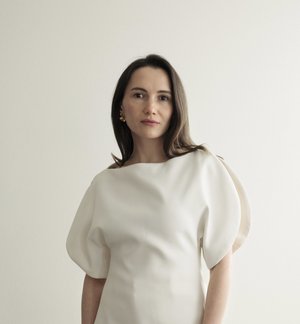
Sculptural Ceramic Vases
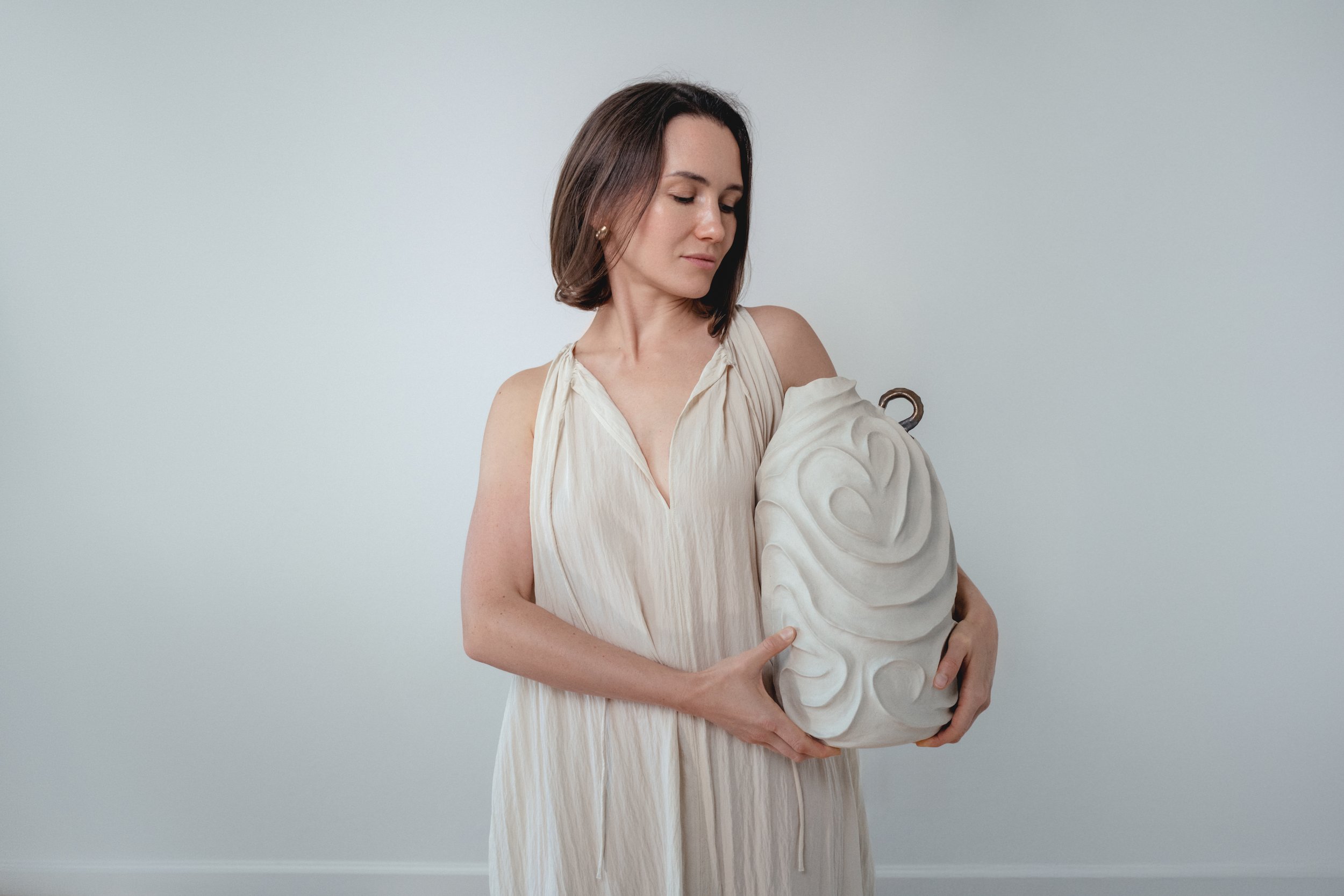
Holding Alabaster No. 1
A sculptural ceramic vase is made to be looked at as an object first and used as a vessel second. It can hold a branch or a single stem, but it doesn't need to — empty, it still holds the room. I'm a ceramic artist in San Jose, and hand-built sculptural vases are most of what I make. Here's what separates one from an ordinary vase, and how to choose the right one for a space.
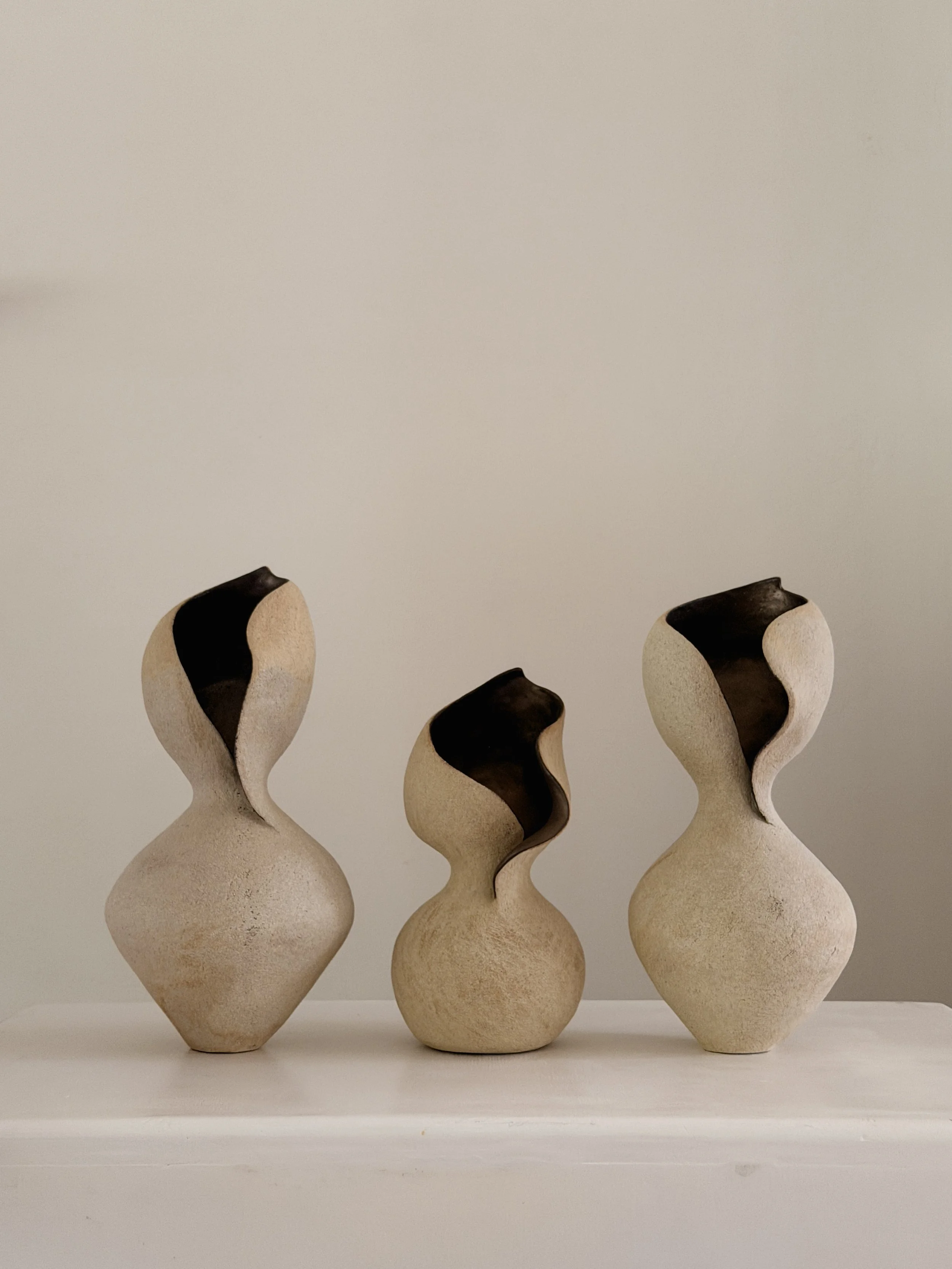
The She series — a woman's body, never the same, each one is different.
What makes a vase "sculptural"
The difference is intent. A functional vase is designed around the flowers — the form recedes so the arrangement can lead. A sculptural ceramic vase inverts that: the silhouette, proportion, and surface are composed the way a small sculpture would be, and the opening is part of the composition rather than the reason for it.
Three things usually signal a sculptural piece: a form that stands on its own (an unexpected curve, a folded or shell-like wall you'd recognize across a room); a surface that carries the hand (tool marks, a matte stoneware skin that shifts with the light); and singularity — because it's hand-built rather than cast from a mold, there's no second copy.
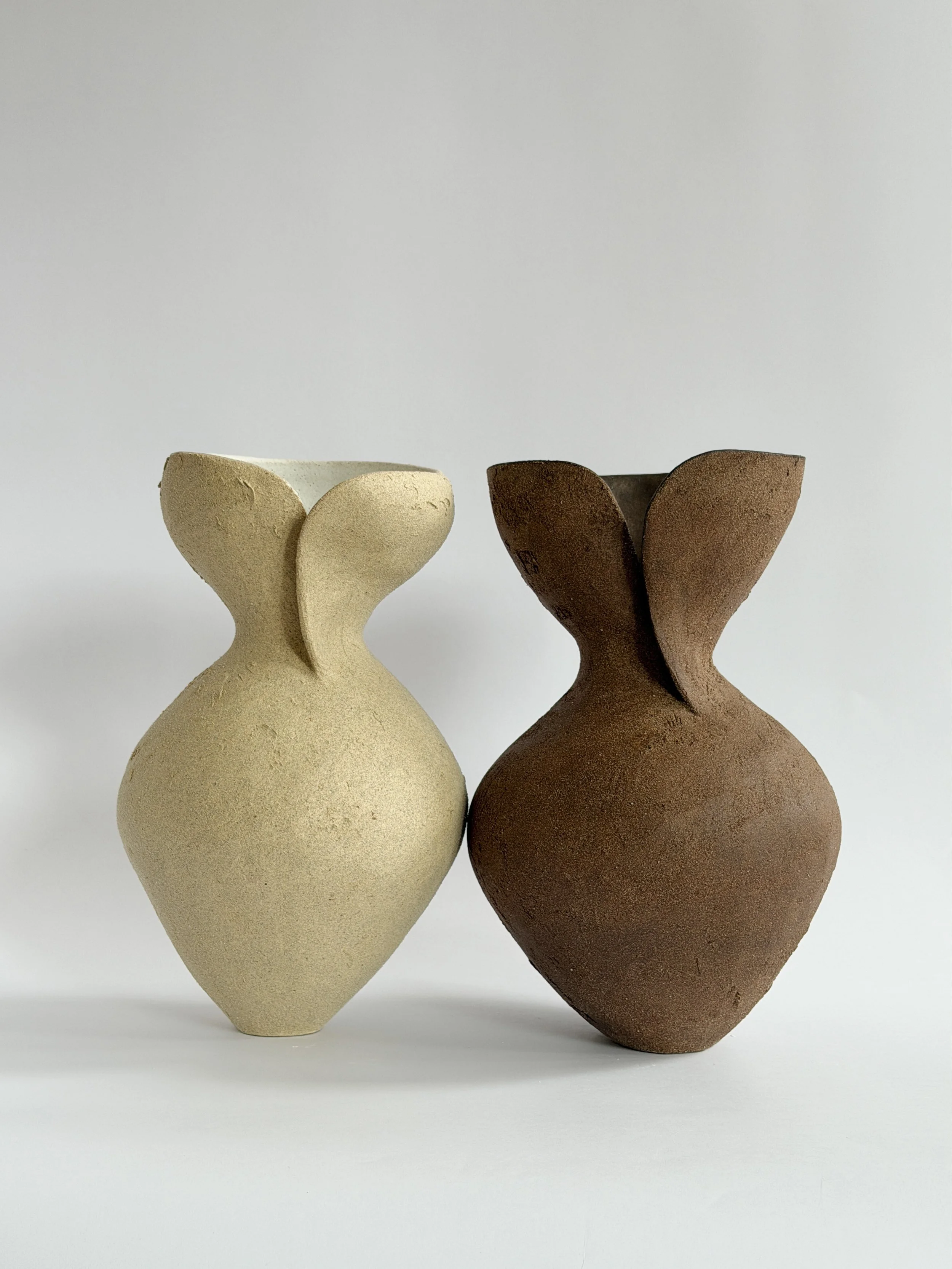
One form, two clays — made to stand alone or together.
Why designers use them
A room of manufactured objects has no visible point of making. One hand-built piece changes that — it gives the eye a place where a human decision shows, which is why designers use sculptural ceramics as the "soul object" on a console, mantel, or dining table. That's the role my work played at the 2026 San Francisco Decorator Showcase: a large white sculptural vase and a group of Shell vessels as the organic counterpoint in a contemporary room. You rarely need more than one such piece — you need it placed where the eye lands.
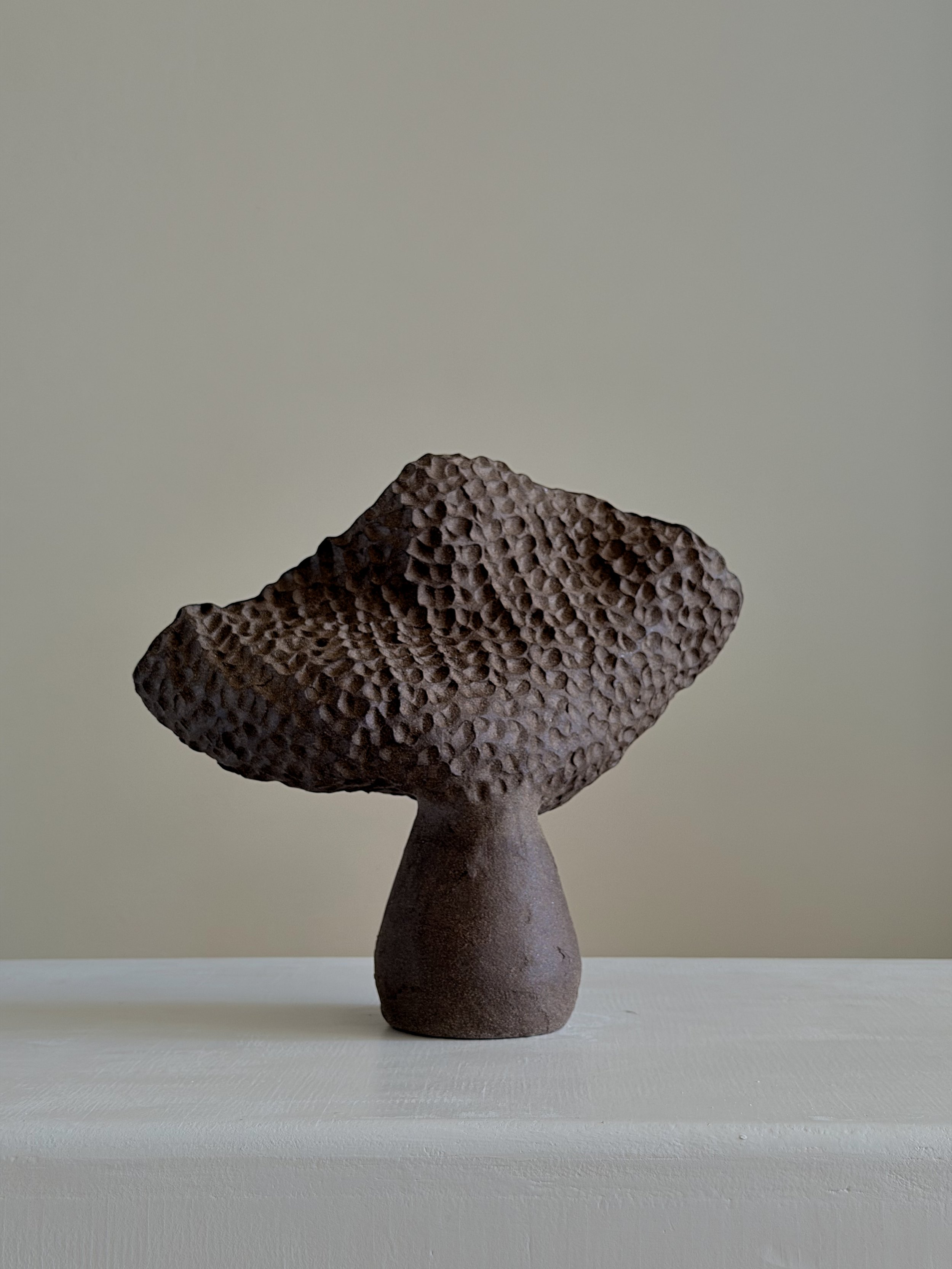
Coral in clay — I just follow nature's geometry, cell by cell.
How to choose one
Scale first. The common mistake is buying too small. On a console or mantel, a single tall piece (14"+) usually reads better than a cluster; on a table or deep shelf, a lower, wider form has more presence. Measure the space it needs to fill before anything else.
Then form and palette. Decide whether the piece should be the quiet anchor or the statement, and match the room's undertone (warm vs. cool) rather than an exact color — matte, earth-toned stoneware sits with almost anything.
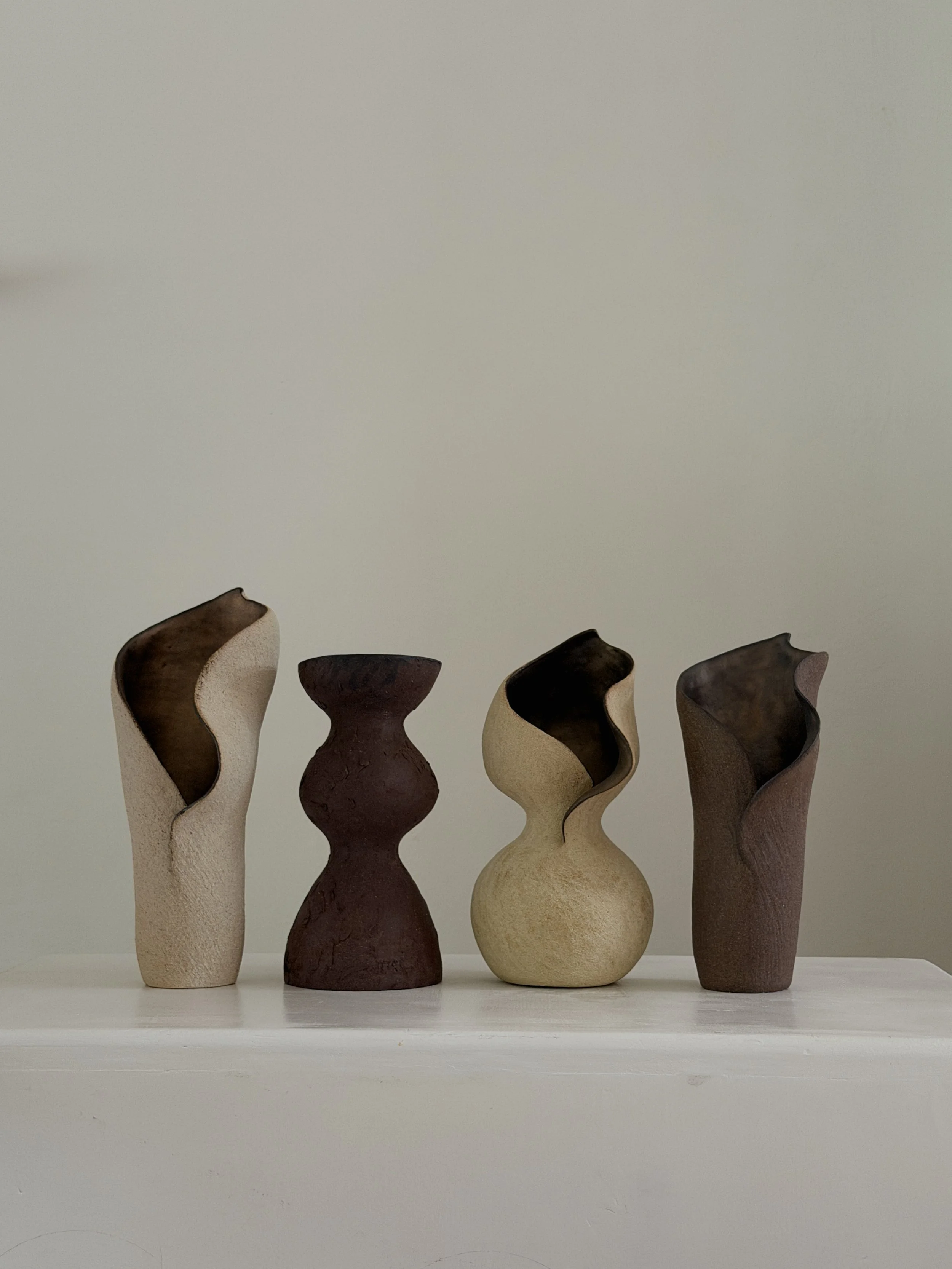
A season on the shelf, and no two ever the same.
Where to find them
The Bay Area has no gallery dedicated to one-of-a-kind sculptural ceramics (more on that here), so buying directly from the artist matters. My available sculptural ceramic vases — plus sculptures, wall pieces, and trays — are all on this site, hand-built and signed, roughly $220–$1,500. If nothing fits the room, a commission usually can. Designers are welcome to reach out.